
Introduction: Navigating the Global Market for Plastic Jar Packaging
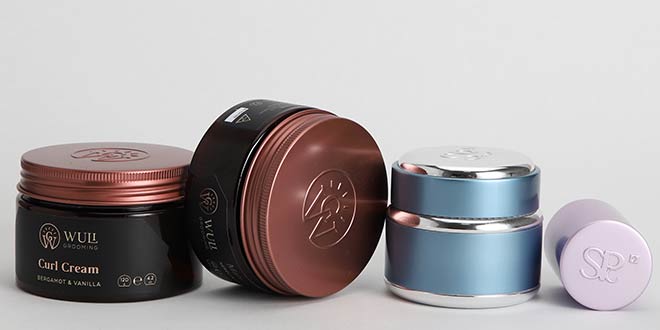
Navigating the global market for plastic jar packaging is essential for B2B buyers looking to enhance their product offerings while ensuring compliance with industry standards. As businesses expand into international markets, particularly in regions such as Africa, South America, the Middle East, and Europe, the demand for versatile, durable, and cost-effective packaging solutions like plastic jars continues to rise. These containers are not only crucial for preserving product integrity but also play a significant role in branding and consumer appeal.

This guide provides a comprehensive overview of plastic jar packaging, covering various types, materials, manufacturing processes, quality control measures, and supplier insights. It also delves into cost considerations and market trends, enabling buyers to make informed decisions tailored to their specific needs. With the projected growth of the plastic jar market, anticipated to reach USD 28.6 billion by 2034, understanding these dynamics will empower businesses to capitalize on emerging opportunities.
In addition, this resource addresses frequently asked questions that can help clarify common concerns and misconceptions about plastic jar packaging. By equipping international B2B buyers with the knowledge needed to navigate this landscape, the guide ensures that they can source effective packaging solutions that meet their operational and regulatory requirements, ultimately driving success in their respective markets.
Understanding Plastic Jar Packaging Types and Variations
| พิมพ์ชื่อ | คุณสมบัติเด่นที่สำคัญ | แอปพลิเคชัน B2B หลัก | ข้อดีและข้อเสียโดยย่อสำหรับผู้ซื้อ |
|---|---|---|---|
| ขวด PET | High impact resistance, lightweight, and recyclable | Food & beverages, cosmetics | Pros: Cost-effective, reduces shipping costs; Cons: Less durable than glass. |
| HDPE Wide Mouth Jars | Sturdy, chemical-resistant, and available in various sizes | Industrial, chemicals, food storage | Pros: Excellent for corrosive materials; Cons: Limited transparency. |
| Polypropylene Jars | Versatile, lightweight, and can withstand high temperatures | Personal care, food, pharmaceuticals | Pros: Good for hot-filling; Cons: May not be as eco-friendly as others. |
| PVC Jars | Clear, rigid, and offers good barrier properties | Cosmetics, electronics | Pros: Excellent visibility; Cons: Not recyclable in all regions. |
| PS (Polystyrene) Jars | Lightweight, good clarity, and cost-effective | Food packaging, retail display | Pros: Attractive for retail; Cons: Not suitable for high temperatures. |
ขวด PET
Polyethylene Terephthalate (PET) jars are known for their high impact resistance and lightweight nature. These jars are ideal for packaging food and beverages, as well as cosmetics, due to their recyclability. When considering PET jars, B2B buyers should evaluate their cost-effectiveness and the potential for reduced shipping expenses, as their lightweight design minimizes transportation costs. However, it’s essential to note that while PET jars are durable, they are not as robust as glass alternatives.
HDPE Wide Mouth Jars
High-Density Polyethylene (HDPE) wide mouth jars are recognized for their sturdiness and chemical resistance, making them suitable for industrial applications, chemicals, and food storage. The wide mouth design facilitates easy filling and dispensing, which is advantageous in manufacturing settings. B2B buyers should consider the jar’s resistance to corrosive substances, which enhances product safety. However, HDPE jars often lack transparency, which may not be ideal for products that benefit from visual presentation.
Polypropylene Jars
Polypropylene jars are versatile and lightweight, capable of withstanding high temperatures, making them suitable for hot-filling applications. These jars are commonly used in personal care, food, and pharmaceutical industries. When selecting polypropylene jars, buyers should appreciate their heat resistance and the ability to create airtight seals. A downside is that polypropylene may not be as eco-friendly as other materials, which could impact sustainability-focused businesses.
PVC Jars
Polyvinyl Chloride (PVC) jars are characterized by their clear, rigid structure and good barrier properties, making them suitable for packaging cosmetics and electronics. The clarity of PVC allows for excellent product visibility, enhancing shelf appeal. Buyers should weigh the advantages of aesthetic presentation against the fact that not all regions have recycling options for PVC, which can pose environmental concerns.
PS (Polystyrene) Jars
Polystyrene jars are lightweight and offer good clarity, making them a cost-effective option for food packaging and retail displays. These jars are particularly attractive for products that require visual marketing. When considering PS jars, B2B buyers should note their aesthetic benefits; however, they are not suitable for high-temperature applications, which limits their use in certain industries. Additionally, the recyclability of polystyrene can vary by region, which is a crucial factor for environmentally conscious companies.
Related Video: Lecture 1 Two compartment models
Key Industrial Applications of Plastic Jar Packaging
| อุตสาหกรรม/ภาคส่วน | Specific Application of Plastic Jar Packaging | มูลค่า/ประโยชน์ต่อธุรกิจ | ข้อควรพิจารณาในการจัดหาแหล่งข้อมูลที่สำคัญสำหรับแอปพลิเคชันนี้ |
|---|---|---|---|
| Food & Beverages | Packaging for sauces, condiments, and snacks | Extended shelf life, contamination prevention | Compliance with food safety standards, material certification |
| Cosmetics & Personal Care | Containers for creams and lotions | Product preservation, enhanced shelf appeal | Customization options, compatibility with product formulations |
| เภสัชภัณฑ์ | Packaging for ointments and powders | Tamper-evident seals, compliance with health regulations | Meeting regulatory standards, ensuring chemical compatibility |
| Chemicals & Industrial | Storage for solvents and industrial products | Durability, resistance to chemical reactions | Material specifications, compatibility with stored substances |
| E-Commerce | Shipping containers for bulk products | Cost-effective shipping, reduced breakage during transit | Lightweight materials, secure sealing options |
Food & Beverages
Plastic jars are extensively used in the food and beverage industry for packaging sauces, condiments, and snacks. Their lightweight and durable nature helps in preserving the freshness of products while preventing contamination. For international buyers, particularly in regions like Africa and South America, sourcing jars that comply with local food safety standards is essential. Additionally, understanding the logistics of transporting food products can help mitigate risks associated with spoilage during shipping.
Cosmetics & Personal Care
In the cosmetics sector, plastic jars serve as effective containers for creams, lotions, and other personal care products. These jars not only enhance product visibility on shelves but also ensure that formulations remain stable over time. Buyers from the Middle East and Europe should prioritize sourcing options that allow for customization, as branding plays a significant role in consumer purchasing decisions. Furthermore, ensuring compatibility with various cosmetic formulations is crucial to prevent adverse reactions.
เภสัชภัณฑ์
The pharmaceutical industry relies on plastic jars for packaging ointments, powders, and other medicinal products. These jars often feature tamper-evident seals, which are vital for consumer safety and regulatory compliance. B2B buyers in this sector must ensure that their packaging meets stringent health and safety regulations, such as those outlined by ISO standards. Additionally, buyers should consider the chemical compatibility of the jar materials with the stored pharmaceuticals to avoid contamination.
Chemicals & Industrial
Plastic jars are also utilized in the chemicals and industrial sectors for storing solvents and other industrial products. Their durability and resistance to chemical reactions make them an ideal choice for safely containing hazardous materials. Buyers should pay close attention to material specifications and ensure that the jars are compliant with international safety standards. This is particularly important for companies operating in regions with strict regulatory frameworks.
E-Commerce
With the rise of e-commerce, plastic jars have become popular for shipping bulk products. Their lightweight nature reduces shipping costs while minimizing the risk of breakage during transit. International B2B buyers, especially those in emerging markets, should focus on sourcing jars that provide secure sealing options to ensure product integrity during long-distance shipping. Understanding local logistics and distribution channels can further enhance the effectiveness of their packaging solutions.
Related Video: Edible, Biodegradable Food Packaging – Headline Science
Strategic Material Selection Guide for Plastic Jar Packaging
Material Analysis for Plastic Jar Packaging
When selecting materials for plastic jar packaging, international B2B buyers must consider various factors such as product compatibility, cost, and regulatory compliance. Below, we analyze four common materials used in plastic jar manufacturing: Polyethylene Terephthalate (PET), High-Density Polyethylene (HDPE), Polypropylene (PP), and Polystyrene (PS).
Polyethylene Terephthalate (PET)
Key Properties:
PET is known for its excellent clarity, strength, and impact resistance. It has a temperature rating of up to 60°C (140°F) and exhibits good barrier properties against moisture and gases, making it suitable for food and beverage applications.
Pros & Cons:
PET jars are lightweight and offer high durability, which reduces shipping costs. They are also recyclable, appealing to environmentally conscious consumers. However, they can be more expensive than other plastics and may not withstand high temperatures, limiting their use in hot-fill applications.
Impact on Application:
PET is particularly compatible with food and beverage products, as it does not leach harmful chemicals. Its clarity allows consumers to see the product inside, enhancing visual appeal.
Considerations for International Buyers:
Buyers from regions like Africa and South America should ensure compliance with local food safety regulations, which may vary. PET packaging often meets international standards such as FDA approval for food contact, but regional certifications may also be required.
High-Density Polyethylene (HDPE)
Key Properties:
HDPE is characterized by its high tensile strength and resistance to impact and chemicals. It can handle temperatures up to 120°C (248°F) and is known for its excellent moisture barrier properties.
Pros & Cons:
HDPE jars are cost-effective and highly durable, making them suitable for a wide range of products, including industrial and personal care items. However, they may not be as visually appealing as PET or glass, which can be a drawback in consumer-focused markets.
Impact on Application:
HDPE is suitable for products that require a robust container, such as cleaning supplies and food items. Its chemical resistance allows it to safely store various substances without risk of degradation.
Considerations for International Buyers:
B2B buyers in the Middle East and Europe should verify compliance with ASTM and DIN standards for food safety. HDPE is widely accepted globally, but specific regulations may apply depending on the product being packaged.
Polypropylene (PP)
Key Properties:
Polypropylene offers excellent chemical resistance and can withstand temperatures up to 130°C (266°F). It is known for its low density and good impact resistance.
Pros & Cons:
PP jars are lightweight and have a lower production cost compared to PET, making them an economical choice. However, they have lower clarity and may not be suitable for products that require visual appeal.
Impact on Application:
PP is ideal for packaging cosmetics and personal care products due to its chemical resistance. It also provides an airtight seal, which is beneficial for preserving product integrity.
Considerations for International Buyers:
For buyers in Europe and South America, ensuring compliance with local regulations regarding cosmetic packaging is crucial. PP is generally accepted but may require specific certifications based on the end-use.
Polystyrene (PS)
Key Properties:
Polystyrene is known for its rigidity and clarity, with a temperature tolerance of up to 70°C (158°F). It has good barrier properties against moisture but is less resistant to chemicals compared to other plastics.
Pros & Cons:
PS jars are cost-effective and provide excellent visual appeal, making them suitable for retail products. However, they are more brittle and can break easily, which may lead to higher shipping costs due to damage.
Impact on Application:
PS is often used for packaging non-food items, such as cosmetics and pharmaceuticals. Its clarity makes it attractive for products that benefit from visibility.
Considerations for International Buyers:
Buyers from Africa and the Middle East should be aware of specific regulations regarding the use of PS in food packaging, as it may not meet safety standards in all regions.
ตารางสรุป
| วัสดุ | Typical Use Case for Plastic Jar Packaging | ข้อได้เปรียบหลัก | ข้อเสีย/ข้อจำกัดหลัก | ต้นทุนสัมพันธ์ (ต่ำ/กลาง/สูง) |
|---|---|---|---|---|
| Polyethylene Terephthalate (PET) | Food and beverage products | Excellent clarity and strength | Limited high-temperature resistance | Medium |
| High-Density Polyethylene (HDPE) | Industrial and personal care items | Cost-effective and durable | Less visual appeal | ต่ำ |
| Polypropylene (PP) | Cosmetics and personal care products | Lightweight and economical | Lower clarity | ต่ำ |
| Polystyrene (PS) | Non-food items like cosmetics | Good visual appeal | Brittle and prone to breakage | ต่ำ |
This guide provides a comprehensive overview of the materials available for plastic jar packaging, enabling international B2B buyers to make informed decisions based on their specific needs and regional regulations.
In-depth Look: Manufacturing Processes and Quality Assurance for Plastic Jar Packaging
Understanding Manufacturing Processes for Plastic Jar Packaging
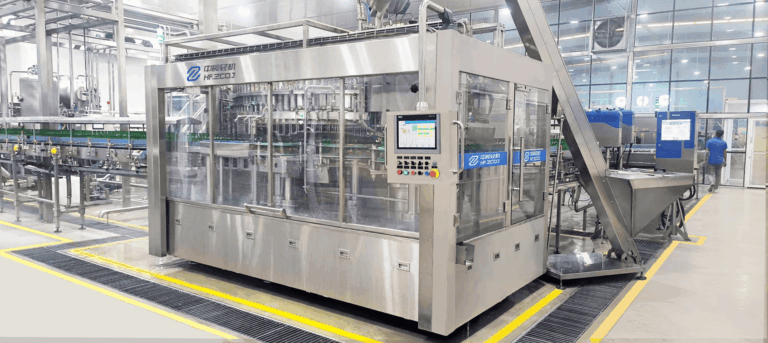
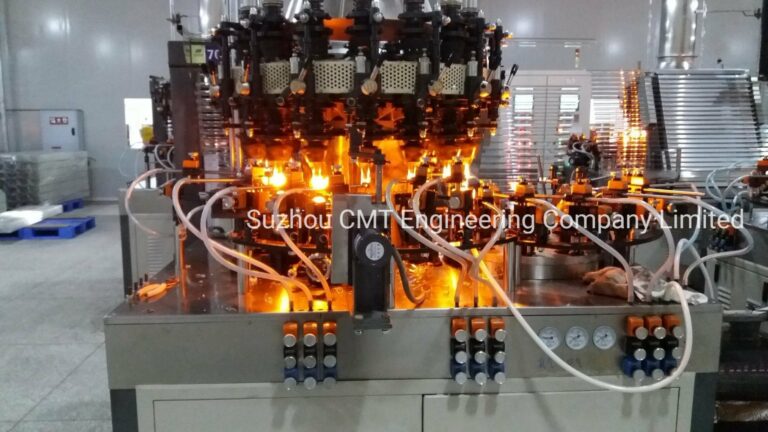
The manufacturing process for plastic jar packaging involves several critical stages, each designed to ensure the production of high-quality, durable, and functional containers. For international B2B buyers, particularly those sourcing from regions like Africa, South America, the Middle East, and Europe, understanding these stages can facilitate better purchasing decisions and supplier evaluations.
Main Stages of Manufacturing
-
Material Preparation
– The first step involves selecting the appropriate plastic resin, typically PET (Polyethylene Terephthalate), HDPE (High-Density Polyethylene), or PP (Polypropylene). These materials are favored for their lightweight, durability, and recyclability.
– Resins are processed into pellets and stored until needed. The quality of the resin impacts the final product, so sourcing from reputable suppliers is crucial. -
Forming
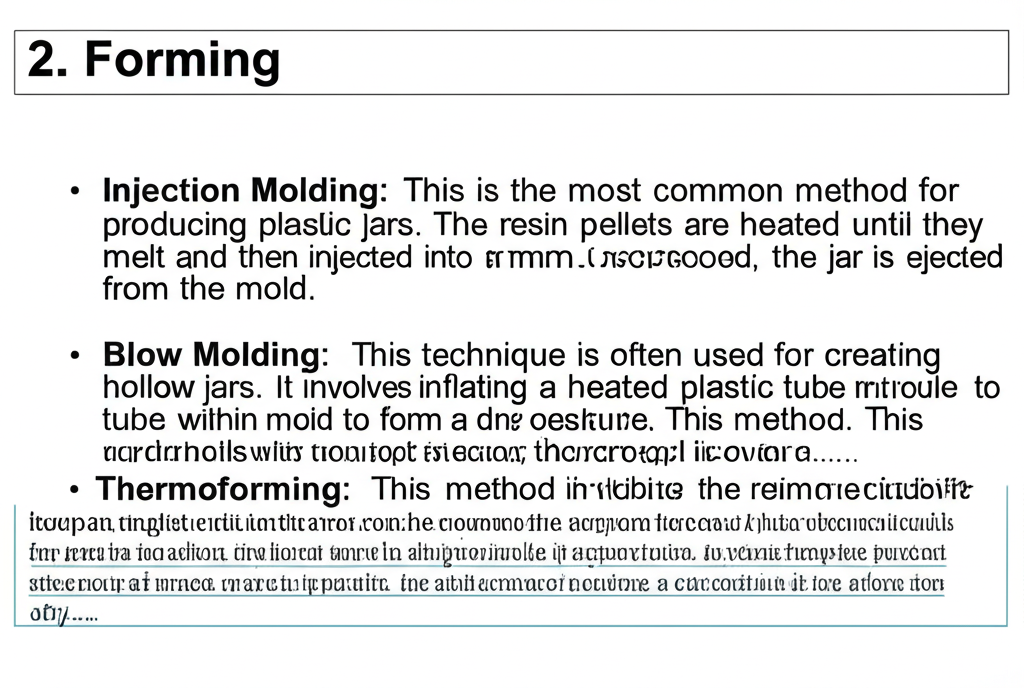
– Injection Molding: This is the most common method for producing plastic jars. The resin pellets are heated until they melt and then injected into a mold. Once cooled, the jar is ejected from the mold.
– Blow Molding: This technique is often used for creating hollow jars. It involves inflating a heated plastic tube within a mold to form the desired shape.
– Thermoforming: This method involves heating a plastic sheet until pliable and then shaping it over a mold. It’s typically used for thinner-walled jars.
-
Assembly
– This stage may include adding components such as lids, seals, or labels. Automated assembly lines are commonly used to ensure efficiency and consistency.
– Quality checks are integrated at this stage to ensure that components fit securely and function as intended. -
Finishing
– The finishing process can include surface treatments such as UV coating, printing, or labeling. These enhancements not only improve aesthetics but also add functional properties, such as UV resistance.
– Final inspection occurs before packaging to ensure that each jar meets the specifications outlined in the design.
Quality Assurance in Plastic Jar Manufacturing
Quality assurance is paramount in the production of plastic jars, particularly due to stringent international standards and the diverse needs of global markets.
Relevant International Standards
- ISO 9001: This standard outlines the requirements for a quality management system (QMS) that ensures consistent quality in products and services. Manufacturers certified under ISO 9001 demonstrate their commitment to quality and customer satisfaction.
- เครื่องหมาย CE: For products sold in the European market, CE marking indicates compliance with health, safety, and environmental protection standards. It is particularly relevant for food packaging.
- API Standards: For pharmaceutical applications, the American Petroleum Institute (API) sets standards that may be applicable to plastic packaging used for medicinal products.
Quality Control Checkpoints
Quality control (QC) is integrated at various stages of the manufacturing process:
- การควบคุมคุณภาพขาเข้า (IQC): This involves inspecting raw materials upon delivery to ensure they meet specified standards before production begins.
- การควบคุมคุณภาพระหว่างกระบวนการ (IPQC): Ongoing inspections are conducted during the manufacturing process. This includes monitoring temperature, pressure, and material flow to detect any deviations early.
- การควบคุมคุณภาพขั้นสุดท้าย (FQC): At this stage, finished products are subjected to rigorous testing, including visual inspections, dimensional checks, and performance tests (e.g., leak testing, drop tests).
Common Testing Methods
- Mechanical Testing: Assesses the strength and flexibility of the plastic material to ensure it can withstand handling and transportation.
- Chemical Testing: Ensures that the materials used do not leach harmful substances into the packaged products, especially crucial for food and pharmaceuticals.
- Environmental Testing: Evaluates the jar’s performance under different environmental conditions, such as temperature fluctuations and humidity.
Verifying Supplier Quality Control
For B2B buyers, particularly those in emerging markets, verifying a supplier’s QC processes is essential to ensure product quality and compliance with international standards. Here are actionable steps to consider:
-
Supplier Audits: Conducting on-site audits can provide valuable insights into a supplier’s manufacturing practices, QC processes, and adherence to standards. These audits can help identify potential risks and areas for improvement.
-
Requesting Quality Reports: Suppliers should provide detailed quality reports that document their QC processes, including testing methods and results. Look for transparency in these reports to assess reliability.
-
Third-Party Inspections: Engaging third-party inspection services can offer an unbiased assessment of the supplier’s manufacturing capabilities and product quality. This is particularly beneficial when sourcing from regions with varying regulatory standards.
-
Certifications Verification: Ensure that suppliers possess relevant certifications (e.g., ISO 9001, CE) and verify their validity through the issuing organizations.
Navigating Quality Control Nuances for International Buyers
International buyers should be aware of specific nuances that may affect the quality assurance of plastic jar packaging:
- Regulatory Differences: Each region may have different regulations governing packaging materials. For example, the EU has stringent regulations regarding food safety, which may not be as rigorous in other regions. Understanding these differences is crucial for compliance and market entry.
- Cultural Considerations: In some cultures, perceptions of quality may vary. For instance, buyers in Europe may prioritize eco-friendliness and recyclability more than those in other regions. Tailoring packaging solutions to meet local expectations can enhance market acceptance.
- Supply Chain Dynamics: Global supply chains can introduce variability in material quality and manufacturing practices. Buyers should consider sourcing from suppliers with a robust track record in quality management, especially when dealing with multiple suppliers across different regions.
By understanding the manufacturing processes and quality assurance measures for plastic jar packaging, B2B buyers can make informed decisions that enhance their product offerings and ensure compliance with international standards. This knowledge is vital in fostering strong supplier relationships and achieving successful outcomes in diverse markets.
Related Video: Plastic bottle manufacturing process – explained by UpSkul
Comprehensive Cost and Pricing Analysis for Plastic Jar Packaging Sourcing
Analyzing the cost structure and pricing for plastic jar packaging is essential for international B2B buyers, particularly in regions like Africa, South America, the Middle East, and Europe. Understanding the components of cost and the factors influencing pricing can help buyers make informed decisions.
Cost Components
-
Materials
The primary material for plastic jars is typically PET (Polyethylene Terephthalate), known for its durability and recyclability. The cost of raw materials fluctuates based on market demand, availability, and sourcing location. Buyers should consider the implications of using recycled materials versus virgin plastics, as this can affect pricing. -
Labor
Labor costs vary significantly by region. For example, manufacturing in countries with lower labor costs can yield savings. However, consider the skill level required for production, as higher-skilled labor may lead to increased costs but potentially better quality. -
Manufacturing Overhead
Overhead costs include utilities, facility maintenance, and general administrative expenses. These costs are often distributed across all products manufactured, so understanding the production volume is crucial. Higher production volumes generally lead to lower overhead per unit. -
Tooling
Tooling costs are significant for custom designs or specific sizes of jars. Investment in molds and machinery can be substantial, especially for unique specifications. Buyers should inquire about tooling costs upfront, as they can be a major factor in the initial pricing structure. -
Quality Control (QC)
Implementing stringent quality control measures ensures that products meet necessary standards and specifications. While this adds to overall costs, it is vital for compliance, especially in regulated industries like food and pharmaceuticals. -
Logistics
Transportation costs can vary widely based on distance, mode of transport, and shipping terms. Buyers should account for potential tariffs and duties, particularly when importing from different countries. Efficient logistics management can help mitigate some of these costs. -
Margin
Suppliers will typically apply a markup to cover their costs and ensure profitability. The expected margin can vary based on market competition, supplier reputation, and the specific negotiations made during the sourcing process.
Price Influencers
-
Volume/MOQ (Minimum Order Quantity)
Higher order quantities often lead to better pricing per unit. Suppliers may offer significant discounts for bulk purchases, making it essential for buyers to evaluate their needs carefully. -
Specifications/Customization
Custom designs or specific requirements can increase costs significantly. Buyers should weigh the benefits of customization against the additional costs involved. -
Materials
The choice of material impacts pricing; for instance, PET is generally more cost-effective than other plastics. Additionally, opting for biodegradable or specialty materials can further affect the cost. -
Quality/Certifications
Products that require certifications (like ISO or FDA compliance) may incur additional costs. Buyers should ensure that the selected suppliers meet these standards to avoid compliance issues. -
Supplier Factors
The supplier’s location, reputation, and reliability can all influence pricing. Established suppliers may charge more due to their proven quality and service. -
Incoterms
Understanding Incoterms is crucial for international buyers. They define the responsibilities of buyers and sellers regarding shipping, insurance, and tariffs, which can significantly affect overall costs.
Buyer Tips
-
Negotiate
Buyers should leverage their purchasing power when negotiating prices. Engaging multiple suppliers for quotes can provide leverage in negotiations. -
Cost-Efficiency
Consider not just the unit price but the total cost of ownership, which includes shipping, storage, and potential wastage. A lower price may not always equate to better value. -
Pricing Nuances for International Buyers
Buyers from different regions should be aware of the local market dynamics, currency fluctuations, and potential import regulations that could affect pricing. Staying informed about these factors can help in securing better deals.
Disclaimer
The prices discussed herein are indicative and can vary based on market conditions, supplier negotiations, and specific buyer requirements. Always conduct thorough research and obtain multiple quotes to ensure competitive pricing.
Spotlight on Potential Plastic Jar Packaging Manufacturers and Suppliers
This section offers a look at a few manufacturers active in the ‘Plastic Jar Packaging’ market. This is a representative sample for illustrative purposes; B2B buyers must conduct their own extensive due diligence before any engagement. Information is synthesized from public sources and general industry knowledge.
The Top 36 Plastic Jar Manufacturers (polymer-process.com)
The Top 36 Plastic Jar Manufacturers specializes in providing high-quality, recyclable plastic jars suitable for various industries, including food and beverage, cosmetics, and pharmaceuticals. They offer an extensive range of jar styles, including clear, opaque, round, square, and oblong designs, catering to diverse customer needs. With a commitment to sustainability, their products are designed to meet rigorous quality standards, ensuring compliance with international safety regulations.
The company is recognized for its innovative packaging solutions and strong manufacturing capabilities, making it a reliable partner for B2B buyers looking for customized and durable packaging options. Their focus on wholesale and bulk pricing makes them particularly appealing to international markets, including Africa, South America, the Middle East, and Europe.
10 Plastic Packaging Companies in the World (www.reportsanddata.com)
Berry Global, Inc., headquartered in Evansville, Indiana, is a leading manufacturer and marketer of plastic packaging products, with a strong focus on innovation and sustainability. Known for its extensive product portfolio, Berry Global specializes in producing durable plastic jars that cater to a wide range of industries, including food and beverage, pharmaceuticals, and personal care. The company leverages advanced manufacturing capabilities and has a significant international presence, making it a reliable partner for B2B buyers in Africa, South America, the Middle East, and Europe.
Berry Global is recognized for its commitment to quality, holding certifications such as ISO 9001, which underscores its adherence to stringent manufacturing standards. The company’s acquisition of Clopay Plastic Products Co. enhances its offering by integrating breathable plastic films and laminates, reinforcing its position in the competitive plastic jar packaging market.
With a focus on cost-effectiveness and product integrity, Berry Global’s solutions are designed to meet the evolving needs of global markets, ensuring that businesses can trust their packaging to protect and preserve products effectively.
Global Plastic Packaging Companies (www.mordorintelligence.com)
Global Plastic Packaging Companies is a leading manufacturer in the plastic packaging sector, recognized for its robust portfolio in plastic jar packaging solutions. The company specializes in producing high-quality plastic jars tailored for diverse industries, including food and beverages, cosmetics, and pharmaceuticals. With a commitment to sustainability, they utilize advanced manufacturing techniques and materials such as PET, ensuring durability and compliance with international safety standards.
Their operations are backed by certifications such as ISO 9001, indicating a strong focus on quality management. The company has extensive experience in international markets, making them a reliable partner for B2B buyers across Africa, South America, the Middle East, and Europe. Their unique selling proposition includes customizable packaging solutions that cater to specific regulatory requirements, enhancing product safety and shelf life.
การเปรียบเทียบอย่างรวดเร็วของผู้ผลิตที่มีโปรไฟล์
| ผู้ผลิต | สรุปประเด็นสำคัญโดยย่อ | โดเมนเว็บไซต์ |
|---|---|---|
| The Top 36 Plastic Jar Manufacturers | High-quality, customizable plastic jars for various industries. | polymer-process.com |
| 10 Plastic Packaging Companies in the World | Leading manufacturer of durable plastic jars. | www.reportsanddata.com |
| Global Plastic Packaging Companies | Leading global provider of plastic jar solutions. | www.mordorintelligence.com |
Essential Technical Properties and Trade Terminology for Plastic Jar Packaging
Key Technical Properties of Plastic Jar Packaging
Understanding the technical properties of plastic jar packaging is essential for B2B buyers, as these specifications directly influence product performance, safety, and compliance. Here are some critical specifications to consider:
-
Material Grade: Plastic jars are typically made from various materials, including PET (Polyethylene Terephthalate), HDPE (High-Density Polyethylene), and PP (Polypropylene). Each material has unique characteristics affecting durability, chemical resistance, and suitability for specific products. For instance, PET is often preferred for food and beverage packaging due to its excellent barrier properties and recyclability, making it a popular choice among environmentally conscious brands.
-
Tolerance: This refers to the allowable variation in the dimensions of the jar, such as diameter and height. Tolerances are crucial in ensuring that closures fit properly and that jars stack efficiently during transport. Understanding tolerance specifications helps businesses avoid production delays and ensure product compatibility, especially when sourcing from different manufacturers.
-
Seal Integrity: This property indicates the effectiveness of the jar’s closure in preventing leakage and contamination. For products sensitive to air and moisture, such as cosmetics or food items, maintaining seal integrity is vital. Buyers should inquire about testing methods, such as vacuum or pressure tests, to ensure that the packaging will preserve product quality throughout its lifecycle.
-
Impact Resistance: This property defines how well a jar can withstand physical stress during handling and transportation. High impact resistance is essential for reducing breakage and ensuring product safety, especially for fragile contents. Selecting jars with adequate impact resistance is particularly important for B2B buyers in industries like food and beverages, where product loss can be costly.
-
Compliance Standards: Plastic jars must comply with various regulatory standards, such as those set by the FDA (Food and Drug Administration) for food safety. Buyers should ensure that their chosen packaging meets these standards to avoid legal issues and ensure consumer safety.
Common Trade Terminology
Familiarity with industry jargon is crucial for effective communication and negotiation in the B2B space. Here are some common terms related to plastic jar packaging:
-
OEM (Original Equipment Manufacturer): Refers to a company that produces parts or equipment that may be marketed by another manufacturer. In the context of plastic jars, OEMs often provide custom packaging solutions tailored to specific client needs, enabling brands to differentiate their products in the marketplace.
-
MOQ (ปริมาณการสั่งซื้อขั้นต่ำ): This term indicates the smallest order size that a supplier is willing to accept. Understanding MOQ is essential for buyers, as it affects inventory management and cash flow. A lower MOQ can be advantageous for small businesses or startups that may not have the resources for large orders.
-
RFQ (คำขอใบเสนอราคา): An RFQ is a document used by buyers to solicit price quotes from suppliers. When purchasing plastic jars, an RFQ can help buyers compare costs and features across different manufacturers, ensuring they get the best value for their investment.
-
Incoterms: These are international commercial terms that define the responsibilities of buyers and sellers in international transactions. Familiarity with Incoterms, such as FOB (Free On Board) or CIF (Cost, Insurance, and Freight), helps B2B buyers understand shipping costs, risk management, and delivery responsibilities, thereby facilitating smoother transactions.
-
ระยะเวลาดำเนินการ: This term refers to the time required from placing an order to receiving the goods. For plastic jar packaging, lead time can vary based on production schedules and shipping methods. Understanding lead time is crucial for inventory planning and ensuring timely product launches.
In conclusion, having a clear grasp of these technical properties and trade terminologies equips B2B buyers with the knowledge necessary to make informed purchasing decisions in the plastic jar packaging market. This understanding not only enhances the procurement process but also contributes to the overall success of their product offerings.
Navigating Market Dynamics, Sourcing Trends, and Sustainability in the Plastic Jar Packaging Sector
Market Overview & Key Trends
The plastic jar packaging sector is experiencing robust growth, driven by a combination of evolving consumer preferences, technological advancements, and regulatory frameworks. The global market is projected to expand significantly, with an estimated value of USD 28.6 billion by 2034, reflecting a compound annual growth rate (CAGR) of 4.4% from 2024 to 2034. Key drivers include the increasing demand for lightweight and cost-effective packaging solutions across industries such as food and beverages, pharmaceuticals, and cosmetics. Notably, the food and beverage sector is anticipated to dominate, capturing over 56% of the market share due to its need for durable and hygienic packaging options.
Emerging B2B sourcing trends are heavily influenced by the rise of e-commerce, which necessitates packaging that can endure long-distance shipping while maintaining product integrity. In regions like Africa and South America, where logistics can be challenging, lightweight plastic jars offer substantial advantages in transportation costs and efficiency. Additionally, there is a growing emphasis on technology integration within the supply chain, including automated packaging solutions and smart packaging technologies that enhance product traceability and consumer engagement.
International buyers should also be aware of the stringent health and safety regulations shaping the market. Compliance with standards such as ISO 22000 ensures that plastic packaging meets safety requirements, thereby increasing demand from manufacturers focused on maintaining high safety standards.
Sustainability & Ethical Sourcing in B2B
Sustainability is becoming an essential consideration for B2B buyers in the plastic jar packaging sector. As environmental concerns escalate, companies are increasingly prioritizing eco-friendly packaging solutions. The production of plastic jars, particularly those made from recycled materials like PET, not only reduces environmental impact but also aligns with the growing consumer preference for sustainable practices.
Ethical sourcing is equally critical, as it ensures that materials are obtained responsibly, with minimal harm to communities and ecosystems. Buyers should seek out suppliers that demonstrate a commitment to sustainable practices, such as using renewable resources and maintaining transparency throughout the supply chain. Certifications such as the Forest Stewardship Council (FSC) and Global Recycle Standard (GRS) can serve as indicators of a supplier’s dedication to sustainable sourcing.
Moreover, businesses that adopt sustainable practices not only enhance their brand reputation but may also benefit from cost savings in the long run, as efficient resource utilization often leads to reduced operational expenses. Engaging with suppliers who prioritize sustainability can ultimately strengthen partnerships and foster a competitive edge in the market.
Brief Evolution/History
The evolution of plastic jar packaging can be traced back to the mid-20th century when advancements in polymer science led to the development of versatile plastic materials. Initially, glass containers dominated the market due to their durability and aesthetic appeal. However, as industries sought cost-effective and lightweight alternatives, plastic jars gained popularity. Over the decades, innovations in manufacturing processes, such as blow molding and injection molding, have further enhanced the quality and design of plastic jars, making them suitable for a wide range of applications.
Today, plastic jars are not only recognized for their functionality but also for their role in promoting sustainability. The industry has embraced recycling initiatives and the use of biodegradable materials, reflecting a broader commitment to environmental stewardship. As global markets continue to evolve, the plastic jar packaging sector remains at the forefront of meeting both consumer demands and regulatory requirements, positioning itself as a crucial component of modern supply chains.
Related Video: Incoterms® 2020 Explained for Import Export Global Trade
Frequently Asked Questions (FAQs) for B2B Buyers of Plastic Jar Packaging
-
How can I effectively vet suppliers of plastic jar packaging?
When vetting suppliers, assess their industry experience, production capacity, and quality assurance processes. Look for certifications such as ISO 9001 for quality management and ISO 22000 for food safety. Request samples to evaluate material quality and design. Additionally, check references from other clients, particularly those in your region, to understand their reliability and service levels. Engaging in virtual meetings can also provide insights into their operations and customer service capabilities. -
What customization options are available for plastic jar packaging?
Most suppliers offer various customization options, including size, color, material (such as PET or HDPE), and design features like closures and labels. Discuss your specific requirements, such as branding elements or unique shapes, with potential suppliers. Ensure they can accommodate your needs within your budget and timeline. Furthermore, inquire about their design capabilities, as some suppliers may provide design services to help optimize your product packaging. -
What are typical minimum order quantities (MOQ) and lead times for plastic jars?
Minimum order quantities vary by supplier, generally ranging from 1,000 to 10,000 units for custom designs, while standard sizes may have lower MOQs. Lead times typically range from 4 to 12 weeks depending on order complexity and supplier location. For urgent needs, consider suppliers who can expedite production or maintain stock of commonly requested items. Always confirm these details upfront to avoid supply chain disruptions. -
What payment terms should I expect when purchasing plastic jar packaging?
Payment terms can vary widely among suppliers, typically including options like upfront payment, a deposit with the balance upon delivery, or net terms (e.g., net 30 or net 60). Negotiate terms that suit your cash flow while ensuring supplier commitment. For large orders, consider using letters of credit for added security. Always ensure that payment terms are clearly outlined in the contract to prevent disputes. -
How do I ensure quality assurance and compliance with certifications for plastic jars?
Request documentation of certifications relevant to your industry, such as FDA compliance for food-related products or ISO certifications for quality management. Implement a quality assurance process that includes inspecting samples before full production and conducting periodic audits of your supplier’s facilities. Establish clear quality standards and communicate these with your supplier to ensure alignment and reduce the likelihood of receiving non-compliant products. -
What logistics considerations should I keep in mind when sourcing plastic jars internationally?
Consider shipping methods (air vs. sea), which impact cost and delivery times. Assess the supplier’s experience with international shipping, including their ability to handle customs clearance and documentation. Work with logistics providers who specialize in your product category to ensure safe transportation. Additionally, factor in insurance to protect against potential damage during transit and plan for any tariffs or duties that may apply. -
How can I handle disputes or issues with suppliers of plastic jar packaging?
Establish clear communication channels and contractual terms that outline expectations, quality standards, and dispute resolution processes. In case of a dispute, try to resolve the issue amicably through direct communication. If necessary, escalate to formal mediation or arbitration as stipulated in your contract. Maintain detailed records of all communications and agreements to support your position if disputes arise. -
What market trends should I be aware of when sourcing plastic jar packaging?
Stay informed about emerging trends such as sustainability, with a growing demand for recyclable or biodegradable materials. The rise in e-commerce has increased the need for durable packaging that can withstand shipping challenges. Additionally, monitor regional preferences for sizes and designs, especially in diverse markets like Africa, South America, and the Middle East. Understanding these trends can help you make informed decisions about your packaging strategy and supplier selection.
Strategic Sourcing Conclusion and Outlook for Plastic Jar Packaging
In conclusion, the strategic sourcing of plastic jar packaging presents a wealth of opportunities for international B2B buyers, particularly in regions such as Africa, South America, the Middle East, and Europe. As the market is projected to grow significantly, with a CAGR of 4.4% from 2024 to 2034, it is essential for businesses to leverage this upward trend by selecting the right packaging solutions that align with their product needs and regulatory requirements.
Key takeaways include the importance of choosing materials that are not only cost-effective but also compliant with health and safety standards, as well as the increasing demand for lightweight and durable packaging due to the rise in e-commerce. By strategically sourcing plastic jars made from materials like PET, businesses can ensure enhanced product safety and extended shelf life, while also optimizing logistics and transportation costs.
Looking ahead, companies should prioritize suppliers who demonstrate flexibility in customization and adherence to safety regulations. This focus will not only enhance product appeal but also foster long-term partnerships. Now is the time for international buyers to invest in innovative packaging solutions that meet the evolving demands of consumers and the marketplace. Your proactive approach today will position your business for success in the competitive landscape of tomorrow.




 Thai
Thai  English
  Russian
  Spanish
  Italian
  French
  Arabic
  Portuguese
  Indonesian
  German